


Frequently Asked Questions
What is a mulching mower?
A mulching mower is a specialized device that not only mows the grass, but also shreds it into small particles. These particles are scattered back onto the lawn, where they serve as a natural fertilizer, protect the soil from drying out, and improve its structure.

Advantages of the technique used
Mowers provide numerous benefits for effective vegetation management. They are extremely effective at cutting grass, shrubs and weeds, offering:
-
Excellent cutting performance
-
Ability to deal with dense vegetation
-
Adaptability to uneven terrain and steep slopes
-
Improved safety
-
Effective mulching
-
Endurance, speed and precision

Which areas are suitable for treatment and processing?
Mowers can be used on various terrains:
-
Farms and agricultural areas
-
Roadside areas
-
Sports fields and playgrounds
-
Orchards and vineyards
-
Parks and recreation areas
-
Lawns around dams
-
Residential properties with larger grassy or overgrown areas

Useful tips
.jpg)
Mowing
When mowing, the height of the grass is regulated. This ensures greater access of light and air to the tillering node and to the ground parts of the grasses, which stimulates shoot formation and increases the amount of leaf mass. Intensively maintained grass stands/height should not be left higher than 5-8 cm. At a higher height, the plants etiolate, the stems have a less developed mechanical tissue. This leads to a decrease in resistance to abiotic and biotic stress.
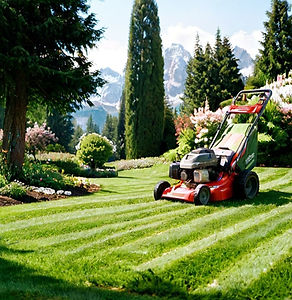
City parks
When lawns are built for parks and gardens of low grasses (Poa pratensis, Festuca rubra), they are mown at a height of 3 - 4 cm, and when dominated by Lolium perenne - 4.0 - 4.5 cm. In drought, the mowing height is increased by 0.5 - 1.0 cm, respectively, and in wet periods it is reduced by 0.5 - 1.0 cm. In shade and weakened chinch blades mow higher. When mowing, no more than 30-50 % of the foliage (1/3 of the height) should be removed. These are artificially created lawns necessarily with an irrigation system.
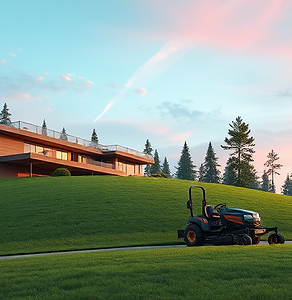.jpg)
Mowing frequency
With frequent rainfall, watering, feeding and low mowing, mow more frequently. In April-May when there is heavy growth it is necessary to mow up to twice a week.
With frequent mowing, in addition to reducing shading, aeration is improved for the lower grasses, and tillering and growth of the taller grasses is inhibited. Low mowing in shaded and dry areas exhausts the grasses.

Photovoltaic power plants and gardens
In fields, gardens and meadows with established RES, parks, orchards, vineyards are mostly weeds and grasses with thick and tough stems. Maintenance is labour intensive and requires specialised mowing equipment.
When these are areas in PV power plants, grass with a height of more than 30 cm that is under a structure leads to a strong reduction of reflected radiation with increased scattering, and in double-faced panels reduces production by more than 10-15%, i.e. reduces the efficiency of the whole plant.
Translated with DeepL.com (free version)


When grass is allowed to grow over 80 cm in height, it shades the bottom row of panels, causing hot spots, impeding air circulation under the structure, and natural cooling is impaired at high air temperatures. The panels overheat, not only dropping performance, but often leading to hot spots and failures.
Mowing as an operation not only eliminates shading, the activity improves turf growth, thickens the grass thatch, reduces the prerequisites of increased dust on the panels and the need for frequent washing with soft water. As a final result, a well maintained lawn improves yield, efficiency and operating costs are reduced. The new grass is tender and suitable for sheep grazing. Depending on the soil moisture build-up during the autumn-winter season, lawn maintenance is recommended 3 to 4 times between March and October.

Mulching
The type of mowing or operation following sickle mowing is highly recommended for any lawn.
City parks
The cut foliage, when not removed from the stand, prevents desiccation, moss formation and is a source of nutrients after mineralization. However, grass chips should not be smothered. In wet periods and in autumn, grass clippings should be collected.
It is advisable to mow when the grass and soil are dry. This prevents soil compaction, which in turn disturbs aeration and hence mineralisation and nutrition in the plants. The spread of phytopathogens is reduced.
If possible, the direction should be changed at the next mowing. Such a change of mowing direction is also recommended if the grass is in lighter and darker stripes.
Photovoltaics
When mulching grass in
photovoltaic power plants, the mulch does not have to be moved outside the plant, which reduces costs. It rots quickly and improves soil quality.
The mulching of grass in PV plants also minimises the risk of fires. With sickle mowing the grass and uncut dry hay during the hot summer months acts as a catalyst for fires. As a final result, a proper and well-maintained grass area in any PV power plant leads to optimized electricity yield, reduced operating costs and lowered prerequisites of significant damage and irreversible losses.

Most common PV system failures and how to fix them

Burnt panel after overheating

Hot zone accelerating cell aging and damage
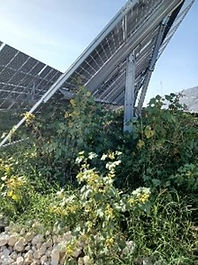
Damage from stopping air circulation and natural cooling in high grass

When the solar panel is shaded, current cannot flow around the weak cells, causing the hot spot effect. The current will eventually concentrate in a few cells, causing them to overheat and melt.Една от най-разпространените причини за повреда на слънчевия панел или опасност от пожар е ефектът на горещата точка. В резултат на това е жизнено важно да се използват байпасни диоди при конструирането на фотоволтаични системи, за да се гарантира, че токът може да протича покрай слабите клетки, докато въздействията от засенчване се намаляват при различни ситуации на засенчване. Друг подход е използването на оптимизатори, електронни устройства които драстично премахват спада в стринга/ струната и подобряват ефективността.
Горещите зони и точки все още са широко разпространени при PV модулите, но се очаква и тази тенденция и да продължи защото, PV модулната технология напредва до по-тънки пластини, по-големи площи на панела и по-тънки рамки на слънчевите панели които са по-податливи на микропукнатини не само по време на производствените, транспортните и монтажните процеси.
Причини са и:
-
Засенчване от дървета, местни предмети и висока трева
-
Засенчване от значително количество прах и птичи, биологични замърсявания
-
Прегряване на модулите от наличие на трева под тях и затрудняваща движението на въздуха и естественото охлаждане


Hot spots on the surface of solar modules are widespread and use a large amount of the module's power.We now know that cast shadows create hot spots.
So where does the shading on the cells come from?
-
Shadow from an object near, in front of or above the solar panel, such as tall grasses, bushes, trees, people or equipment is one of the main causes. Grass strongly influences not only the temperature but also the amount of radiation. Reflected light is scattered over 90% in tall grasses and degrades the albedo in bifacial modules, thereby reducing their efficiency;
-
Another typical cause is blockage, shading of the glass surface caused by dust, soot, oily pollen from sunflower, rapeseed and exhaust , which stops light from entering the cell and some light does not pass through;
-
Flaws in the design of some types of silicon cells known as multicrystalline or polycrystalline cells can also lead to hot spots.
-
Design errors - with saturation of power installed per square metre of ground area and insufficient spacing between rows partially shading the lowest rows at low solstice from November to March, a problem that has existed throughout the lifetime of the plant.
-
Hot spots can have a great impact on nearby cells, which reduce the yield not only of the panel but also of the entire string, and the probability of failure is high if not detected in time.
Hot spots don't just appear out of nowhere. Heat buildup, which can be caused by a variety of circumstances, always has a cause. If your solar panel system has little airflow , the temperature underneath rises due to high grass, adding the operating temperature of the panels increases the likelihood of overheating, and as an end result, accelerated aging and damage.
To prevent overheating of the panels it is necessary to maintain the grass areas next to and under the solar panels, which will provide natural air ventilation and increased reflected radiation. Installing a power optimiser is a type of electronic device that automatically limits the power output when the temperature is too high and is the best approach to avoid overheating, but this needs to be considered at the design stage.

What should we do?
-
Always maintain the lawn in a timely manner. Ensure air flow
Mow the grass under and around the panels regularly. This reduces hot spots and helps with cooling even when there is no wind. -
Use bypass diodes
They prevent the formation of hot spots by allowing current to flow in the event of shading or damage. -
Improve thermal properties
Specialized glass and a back sheet with high thermal conductivity help dissipate heat. -
Keep the panels clean
Regular cleaning prevents the accumulation of dust and dirt, which increase the hotspot effect. -
Use a solar tracking system
It directs the panels towards the sun all day long, but increases maintenance costs. -
Mount at the correct angle
Angle affects cooling, dust accumulation and efficiency. Check the optimal angle for your location. Properly design the spacing between modules to avoid shading from the rows of the bottom row of cells. -
Remove obstacles
Avoid the shadow of trees, bushes, buildings or panels that are too close together. Do not install sensor poles and lightning protection receivers near the panels. Leave enough distance between the structure, inverters and buildings for booster stations.
Additional information

1
Professional gardeners and landscapers increasingly rely on specialized equipment.
Landscapers and gardeners design, build and maintain green spaces - private gardens, parks, roadside areas, sports facilities, etc. They combine quality with economic efficiency, which is why they increasingly trust AV Insight for precise solutions in gardening and landscaping.
2
Tall meadow grass
Since mowing meadows, orchards and roadside greenery can only be done once or twice a year, grass, perennials and shrubs can grow up to 100 cm and more in height. The machines we use provide high productivity and exceptional results under these conditions.
3
Flower meadows
A natural habitat for bees, flower meadows make an important contribution to biodiversity and the protection of our ecosystem. Flower meadows can quickly grow up to 40 cm in height before flowering and need to be mowed 3-4 times a year. Our lawn mowers are also mulching devices and help in the care of flower meadows.